Navigating global trade amidst rising international economic and political risks

– Interview with Carl Bergkvist, Stockholms Handelskammare

Carl Bergkvist is Chief Economist at the Stockholm Chamber of Commerce, and his role involves analyzing economic trends and advocating for policies that drive growth. Stockholm Chamber of Commerce work to strengthen Stockholm’s business climate by focusing on trade, investment, and economic policy.  

We had a chat with Carl to discuss the main obstacles when trying to navigate global trade amidst rising international economic and political risks. We also get some valuable insights from him.

What will you speak about at Nordic Cash & Treasury Management 2025?

I’ll discuss global economic risks, trade challenges, and how businesses can navigate uncertainty in a shifting geopolitical and financial landscape.

Which are the main obstacles when you are working as a Chief Economist and trying to navigate global trade amidst rising international economic and political risks?

Key obstacles include geopolitical tensions, shifting trade policies, and economic volatility, which create uncertainty for businesses and make long-term planning more difficult.

What is the most important thing you would like to share in your presentation and panel discussion?

The importance of resilient trade strategies, smart economic policies, and stronger collaboration between businesses and policymakers to support economic growth.

And finally, what are you most looking forward to by attending and speaking at the event?

Exchanging insights and discussing solutions to help businesses adapt to an increasingly complex trade and economic environment.

Meet Carl at this year’s Nordic Cash & Treasury Management event, March 11-12 at 7A Posthuset in Stockholm!

Nordic Cash & Treasury Management – The 2025 program is out now

Nordic Cash & Treasury Management – The 2025 program is out now

Welcome to Nordic Cash & Treasury Management 2025!

This year’s program consists of selected and experienced speakers that have proven success within certain areas of Cash & Treasury. The event ensures you two days of new knowledge and inspiration made for Treasurers. You get in-depth with the latest trends, valuable content from recognized speakers and extensive opportunities for networking during the days.

• A New Uncertain World; How to Navigate the Complexity and Volatility

• Donald Trump as president; What to Expect from the Next Four Years of Politics

• The US Loss of Trade; Impact on Sweden and Europe Finances and Treasury

• Cybersecurity and Treasury; The Hackers Lurking in Your Shadow

• Consumer Spending Rebound; In the Wake of Interest Rates Decline

• Recruiting and Retention; How to Success with Treasury Talents

• Treasury; Getting Inside the Mindset of the Younger Generation

Read the full program here

Download Pdf-brochure here

Save the date! March 11–12, 2025

Save the date! March 11–12, 2025

Sweden’s most renowned meeting place for professionals in the Corporate Cash Management and Treasury Industry, celebrates its 21st anniversary!

With that, there are several new exciting & interactive features to look forward to, based on the needs and challenges the participants have identified.

Take part in:

  • Inspirational sessions!
  • In depth workshops!
  • More Corporate case studies on how to overcome challenges!
  • Line up of top quality Thought Leaders & Speakers!

We can already reveal the content of the two main themes with a focus on geopolitical risks and macroeconomics:

  • Iceberg ahead! – Navigating Troubled waters of Global Trade Amidst Rising International Economic and Political Risks
  • Macro Focus: Interest Rates Decline, But When Will Consumer Spending Rebound?

Stay tuned, as we’ll be sharing more details about the 2025 agenda soon.

A warm welcome to Stockholm in March!

Do you feel prepared for the future?

Meet our moderator Lasse Jonasson, Director & Futurist, Copenhagen Institute for Future Studies. At the event Lasse Jonasson will guide us throw the agenda as the moderator and he works on a daily basis with not predicting the future, but rather building resilience and identifying opportunities in the face of uncertainty, while also embracing what can emerge out of complexity.

Who is Lasse Jonasson and what is your background?

Lasse Jonasson is a senior futurist and director at the Institute heading the advisory department. Lasse is primarily engaged in advisory of organisations within long term strategic transitions through scenario planning and CIFS concept around Anticipatory Leadership. His competencies lie in anticipating changes and driving forces within industries and industry players, analysing new business models, and driving a transformational change at leadership level to equip leaders to future conditions.

Lasse is primarily engaged with connecting the discipline of strategic foresight with vision, strategy and daily execution.

Lasse has previously worked as an executive in the financial industry with strategic, operational and financial Risk Management, and with the application of technology in the financial industry. He has extensive knowledge with providing high-quality information for strategic decision-making from ATP, Credit Agricole and NETS. Lasse has a master’s degree in business economics.

Please tell us a little more about the Copenhagen Institute For Futures Studies and what you can do for the business.

The Copenhagen Institute for Futures Studies has a long history and proven track-record of working with corporations and organisations worldwide, advising on strategic foresight, megatrend analysis and scenario planning. Futures studies is not about predicting the future, but rather it is about building resilience and identifying opportunities in the face of uncertainty, while also embracing what can emerge out of complexity.

We are global leaders in the use of futurist methods developed to solve strategic organisational and business challenges. We apply the methodology to support our clients in future-proofing strategies, planning beyond forecasting, risk analysis as well as foresight-driven innovation processes.

Can you name any exciting projects that you are currently involved in?

Right now we have a program with the ministry of foreign affairs, where we are building up their foresight capabilities. We are also doing a foresight implementation program for l’Oreal, supporting them in setting up an internal foresight function. And we are doing an inspirational talk series about how AI will influence the future of work. And we have just finished a report for European Space Policy Institute about the future of space.

What do you think is the biggest challenge for us working with Cash Management and Treasury going forward?

I think that grasping the complexities of the global landscape and forecasting future trends is becoming ever more challenging. The paramount task may well be to find the optimal equilibrium between forecasting developments and bracing for unpredictability.

What megatrends do you see coming within the next five years?

Undoubtedly, technological advancement, predominantly driven by artificial intelligence (AI), is set to profoundly impact everyone. It is crucial to grasp this evolution from two angles: firstly, the way it can transform our existing activities, enhancing efficiency, speed, and cost-effectiveness; and secondly, its ability to forge new methods of operation, creating new demands and opportunities.

Another fascinating aspect to consider is the ripple effects on current business models. Should the present rate of innovation persist, I anticipate witnessing exceptionally rapid transformations across numerous sectors, introducing new dynamics. These changes hold the potential to disrupt established business frameworks and the conventional metrics economists depend on for analysis.

Meet Lasse Jonasson, Director & Futurist, Copenhagen Institute at this year’s Nordic Cash & Treasury Management event.

Holistic treasury perspectives enabling effective business partnering with value focus also at strategic levels

Meet our speaker Serene Tan, Head of Subsidiary Treasury and Banking at Equinor ASA. At the event Serene will talk about how holistic treasury perspectives can enable effective business partnering with value focus also at strategic levels.


Tell us a little about yourself
I am passionate about treasury and the ability to impact and enable our business.

Born and raised in Singapore, then moved to US for a year, eventually settled in the countryside of Norway. Love brought me to Norway and my interesting job in Equinor made it possible for me to stay permanently. I have been in Norway for soon 15 years.

As a speaker at this year’s event, you will talk about Holistic treasury perspectives – can you tell us a little more about that?
Treasury is multi-faceted; it is a niche yet broad subject. Treasury is generally related to the process of managing an organization’s liquidity, money market instruments, banking, cash concentration and related to funds flow. During the various crises, treasury has become more core and important. It has also moved from a more reactive to proactive role.

In the session, I will share Equinor’s treasury organization and how it is integrated with our tax department and synergies we have seen. I will also discuss how we interface with the various business units and work closely with them to ensure focus on the overarching principles of maximizing value, optimize access and visibility to cash.

What is the biggest lesson you take with you from your work with that?
Don’t let what’s been done limit the possibilities. Every problem presents an opportunity.

What key insights do you want the audience to bring from your presentation at the event?
Ways to be more proactive in treasury seeking to maximize value and minimize risks for the organization.

And what are you most looking forward to at this year’s event?
Networking and meeting new people; sharing experiences.

Meet Serene at this year’s Nordic Cash and Treasury Management event, talking about Holistic treasury perspectives enabling effective business partnering with value focus also at strategic levels.

NU PRESENTERAS ÅRETS PROGRAM!

På konferensen bjuds ni in till att lyssna till experter, samt inspireras av hur kollegor på andra företag löser sina utmaningar inom dessa områden. Som traditionen bjuder ges tid att nätverka med andra deltagare och lära av varandra. Insikter, nätverkande och kunskap i fokus!

Vi är mycket stolta över att presenta programmet för Nordic Cash & Treasury Management 2023! Du kommer under dagarna bland annat få träffa och lyssna till;

  • Daria Krivonos, CEO & Futurist, Copenhagen Institute for Future Studies
  • Anna Breman, Vice Riksbankschef, Riksbanken
  • Ylva Hedén Westerdahl, prognoschef, Konjunkturinstitutet
  • Sara Högberg, Head of Risk & Treasury Control, Husqvarna
  • William De Vijlder, Group Chief Economist, BNP Paribas
  • Mattias Persson, chefekonom och global chef Swedbank Makroanalys, Swedbank

Läs hela programmet här
Ladda ner broschyren i PDF-format här

Podd #2 – Makroekonomiska påfrestningar i spåren av pandemin och det spända geopolitiska läget – hur hanterar vi riskerna?

Insight events poddar med experter inför konferensen Nordic Cash & Treasury Management

Dagens gäst i podden är John Hassler, professor i makroekonomi på Institutet för internationell ekonomi vid Stockholms universitet. John har forskat mycket på makroekonomi och tillväxt genom åren men har på senare år haft större fokus på samspelet mellan ekonomi och klimat.

När denna podd spelades in var vi i början på mars, och kriget i Ukraina hade precis brutit ut. Hur gick diskussionen då kring handelsrestriktioner, oljepriser och energimarknaden? Och vilka förutsättningar var det som ändå gjorde att den globala ekonomin klarade av att hantera pandemin så pass väl och inte tog långsiktig skada? Samtalet gick även kring klimatfrågan, hur väl står sig egentligen Sveriges klimatpolitik?

Avslutningsvis tar vi en liten framåtblick, vad kan vi förvänta oss under de närmsta åren och hur ser prognoserna ut enligt John?

Lyssna till poddavsnittet om makroekonomi!

Podd #1 – Cyberkriminalitet – statsunderstödd brottslighet, vanor och ökad risk

Insight events poddar med experter inför konferensen Nordic Cash & Treasury Management

Från statsunderstödd organiserad brottslighet till den enskilda individen som hyr kunskapen för att genomföra bedrägerier och cyberhot. Hur ska vi kunna skydda oss?

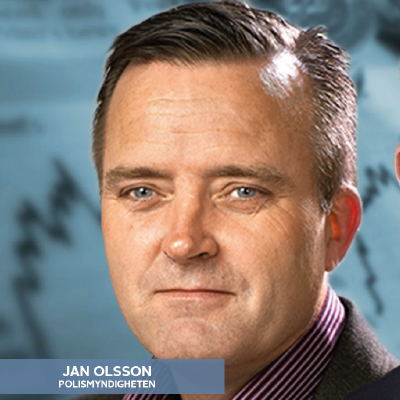
Dagens gäst i podden är Jan Olsson, verksamhetsutvecklare och kriminalkommissarie på Swedish Cybercrime Center SC3/ Nationellt It-Brottscentrum NOA på Polismyndigheten. Med nya vanor, nya tekniska lösningar och inte minst det nu pågående osäkra världsläget, har cybersäkerheten tvingats allt högre upp på agendan. Jan har lång erfarenhet av internetbaserad brottslighet som bedrägerier men även mer komplexa cyberhot som ransomware attacker. Hur kommer det sig att brottslingarna kan fortsätta och vilka är dem? Vi pratar även om vilka de vanligaste cyberhoten är idag och vad vi kan förvänta oss i framtiden. Och vad har Jan själv råkat ut för?

Lyssna till podd-avsnittet om cyberkriminalitet!

“One thing for sure is that using each other’s strengths will be key to deliver better services for customers.” – Galia Elizondo at Finastra on the topic Banks & Fintech

We had a talk with Galia Elizondo, Principal Solution Consultant Trade and Cash Management at Finastra on the topic Banks & Fintech. Galia emphasizes the importance of cooperation and utilizing on each other’s strengths. How can that be improved in the future and where do we stand in 5 years’ time in terms of using each other’s strengths?

Please tell us a little bit more about who you are and your background.

My name is Galia Elizondo, I was born in Mexico, however spent the beginning of my professional career in Madrid, Spain.

As a transactional banking professional with over ten years’ experience, I have a strong background within the corporate banking sector.  I bring the depth of experience earned whilst working for Banco Santander, implementing payments around the world, tailored with the time spent as a product manager for global liquidity management, to my current role as a solution consultant.

Focused on cash, liquidity and payment management within Europe; I work with both banks and non-banking financial institutions as well as the wider partner ecosystem, to ensure the best cash and payments proposition from initiation to settlement.

I strongly believe that what underpins any engagement beyond the technology, is collaboration and that effective engagement management is as powerful as the solution being delivered.

What do you believe will be the main discussion point at this year’s conference and why?

The program has so many topics that are interesting in the current environment, however apart from the Banks and FinTech’s, leveraging on each other’s strengths which is my focus today. I would say that the payments discussion – “how to build the Nordic payment infrastructure of the future” is particularly attractive.

Looking at the future is inspiring, payments which are vital for the economy have been shaken by continuous innovation, price pressure, regulation, and the different players (new entrants vs traditional) are re-shaping the payment infrastructure. API – enabled Open Banking and PSD2, we are seeing a greater adoption of immediate payments; it would be particularly interesting to listen how the Nordic payment infrastructure is being shaped by these changes in the market.

You are talking about banks and fintech at the conference. Why is that an important topic today?

When discussing about innovation we have to talk about FinTech’s. Over the years we have seen an explosion of new fintech entrants and their sudden rise may have been a necessary wake up call for banks to adapt to underlying trends in financial services.

At the beginning banks saw FinTech’s as a threat to their market positions, but today they are seen as opportunities to provide new ideas, new models. Banks and FinTech’s have different strengths and goals.

Treasurers are seeking access to banking products and services via APIS, they are looking to have access to real time payments and they are looking for a connection with other banks and fintech services providers

Banks have started offering many connectivity points for book-keeping platforms, payment service providers, insurance market infrastructures and many trading venues to cater for Treasurer’s requirements, but they are not doing this alone they are partnering with Fintech’s who offer a fresh, agile and innovative approach to problem-solving.

How do banks and fintech companies leverage on each other’s strength today? How can that be improved for the future do you believe?

With the FinTech’s fresh approach to problem solving, combining this with the transaction banks’ industry expertise and their customer knowledge we can have better results than those delivered by either party working in isolation.

Certainly, Fintech’s have brought new levels of innovation across financial services for the benefit of all stakeholders – especially the customer – and this can only be a good thing.

Banks are increasingly choosing for the partnership model with FinTech’s instead of the buy versus build strategies. In the future FinTech’s and banks will need to continually improve these partnership models as a joint idea generation, client validations, setting up new business models in order to equally benefit from. Meaning that they will learn and develop together.

 Where do you think we stand in 5 years’ time in terms of using each other strengths?  What will have changed the most from today?

As we look for the future, we look at a fragmented arena, but banks are still and will remain those trusted partners and Fintech’s will continue to provide new levels of innovation. I think that cooperation with FinTech’s will no longer be a nice to have but a need to have for Banks.

Banking will continue opening up to all the industries and changing the traditional view of what banking means.  Corporates are going to consider how they interact with their financial institutions.

The question is who are they buying financial services from? Would it be a Fintech or a Bank? Would they even mind? Maybe in the payments area, corporates will go for non banks and maybe some services will go to other distributers. One thing for sure is that using each other’s strengths will be key to deliver better services for customers.

Meet Finastra at this year’s Nordic Cash & Treasury Management, May 23-24, 2022!